There is a point in most evenings when the day finally lets go. The laptop closes, the lights get softer, and you want something warm in your hands that doesn’t ask anything of you.
For many of us, that cup used to be chai or a late coffee. But caffeine lingers. Its average half-life is around five hours, so a cup at 7 pm is still partly with you close to midnight. That’s why so many people look for a caffeine-free tea for night: something that keeps the ritual, without the lift.
Chamomile and lavender are two of the oldest choices for exactly that. Here’s how to brew them well, and how to turn one evening cup into a small habit worth keeping.
Why a tisane, not a tea
Strictly speaking, chamomile isn’t tea. Tea comes from one plant, Camellia sinensis, and every green, black, white and oolong tea carries some caffeine. A tisane is an infusion of almost everything else: flowers, herbs, roots and fruit.
Chamomile and lavender are both flowers, and both are naturally free of caffeine. That makes them an easy choice for the last cup of the day, when you want warmth and flavour rather than a lift.
The evening cup isn’t about doing more. It’s a quiet signal that the doing is over.
What chamomile and lavender taste like
Chamomile is soft and round, with a gentle, honeyed sweetness that some people describe as faintly apple-like. Lavender is floral and a little herbaceous, and it’s strong, so a small amount goes a long way.
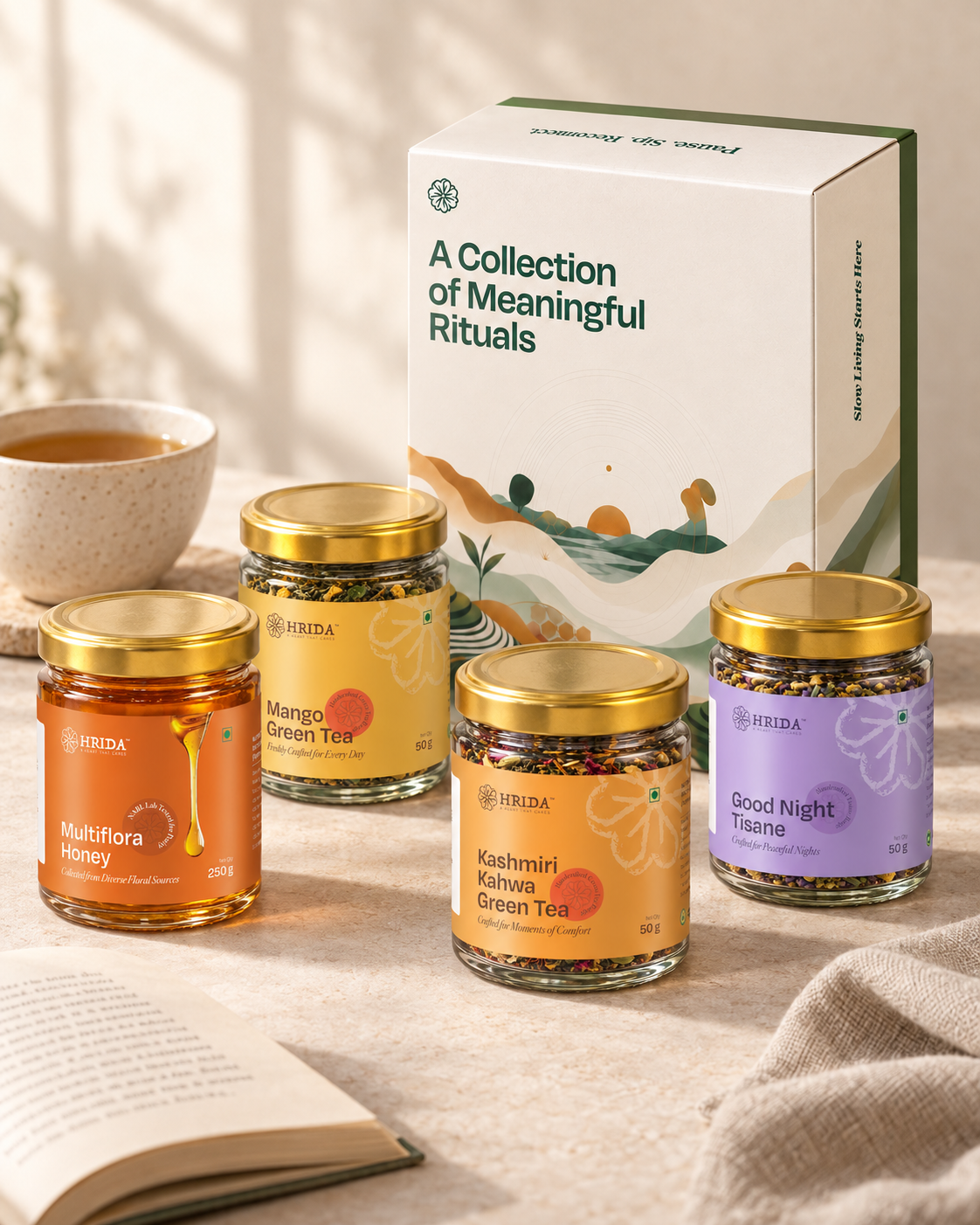
Together, chamomile carries the cup and lavender sits lightly on top, like a garden after the sun goes down. The balance matters. Too much lavender and the cup can taste soapy, which is why it stays a supporting note in our Good Night Tisane.
Brewing it well
Flowers are more forgiving than green tea, and they want hotter water. Where green tea tastes best at 80–85°C (more on that in our guide to brewing green tea without bitterness), chamomile needs water straight off the boil to open up.
Dried flowers are light but full of aroma. Freshly boiled water and five to seven minutes with the lid on draw out their sweetness. Cut it short and the cup can taste thin and slightly grassy.
The ritual, step by step
Bring freshly drawn water to a full boil. Water that has been boiled again and again tastes flatter.
One heaped teaspoon per 200 ml cup. Flowers are lighter than tea leaves, so a heaped spoon gives the right strength.
Pour the water over the flowers and cover the cup or pot, so the aroma stays in the cup.
Five for a lighter cup, seven for a fuller one. Then strain.
Let it cool for a minute, then stir in half a teaspoon of honey if you like.
Sit with the cup for ten minutes. This step matters as much as the brewing.
Building a ritual around the cup
A ritual is a habit with attention in it. The cup itself is simple. What makes it work is repeating it at roughly the same time, in roughly the same way, until it becomes your cue that the day is closing.
A spoon of honey
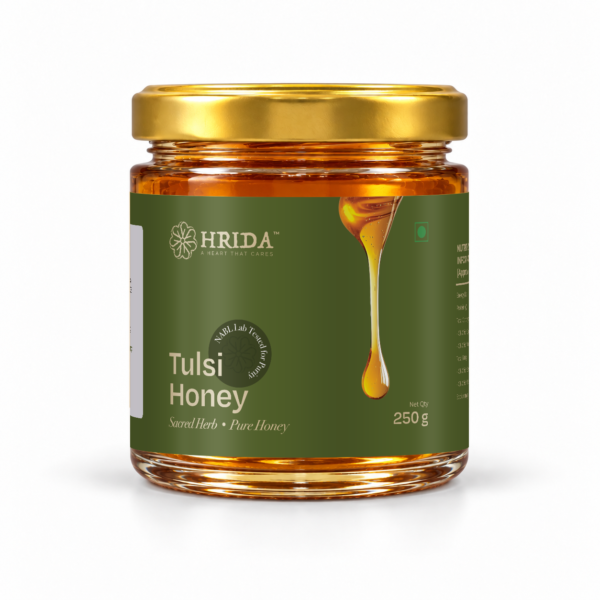
Tulsi Honey has a gentle herbal character that sits well beside chamomile’s soft sweetness. Half a teaspoon, stirred in once the cup has rested for a minute, is enough.
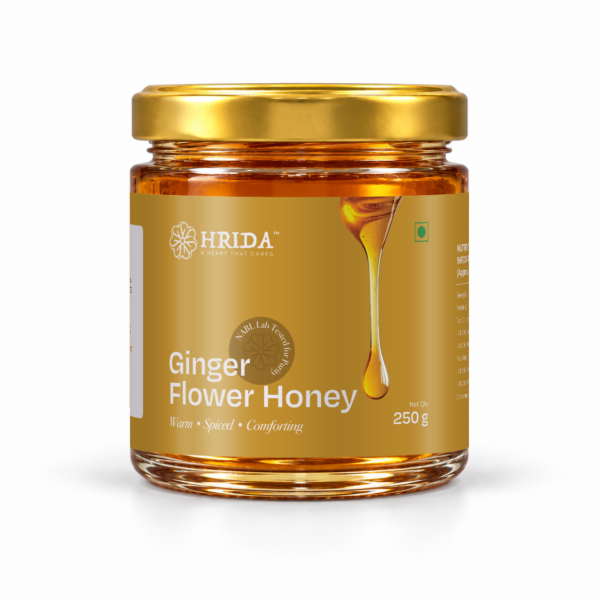
On colder nights, Ginger Flower Honey brings a warmer, spiced note instead. For more combinations, see our tea and honey pairing guide.
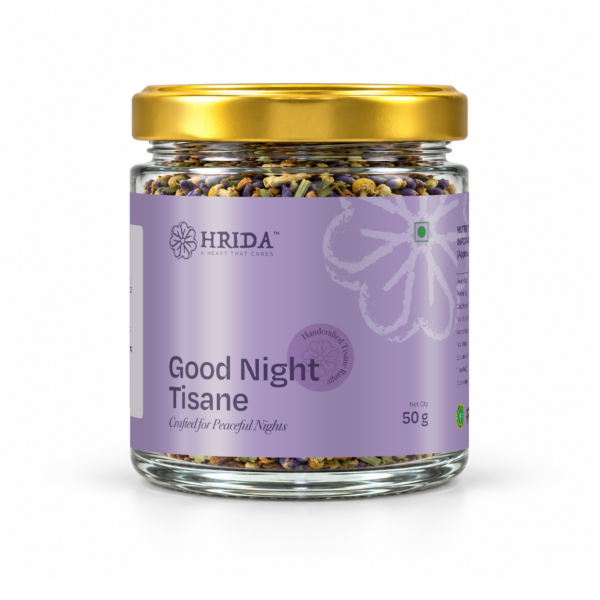
A caffeine-free tisane of chamomile and lavender for slow evenings. About 20 cups per 50 g jar.
View the tisaneMaking it your own
Once the basic cup feels familiar, small changes keep it interesting.
Brew it a little stronger and top it with warm milk for a soft, floral latte. Add a thin slice of fresh ginger on a cold night. Or brew a double-strength cup, let it cool, and keep it in the fridge for a caffeine-free iced tisane on warmer evenings.
Close the jar tightly after each use and keep it away from the stove and direct light. Dried flowers lose their aroma faster than tea leaves once they’re exposed to air.
Common questions
Is chamomile tea caffeine-free?
Yes. Chamomile and lavender are flowers rather than tea leaves, so a blend of the two, like our Good Night Tisane, contains no caffeine.
What water temperature is best for chamomile?
Freshly boiled, around 95–100°C. Unlike green tea, dried flowers need the heat to release their flavour.
How long should chamomile steep?
Five to seven minutes, covered. Steeping longer usually won’t make it bitter the way green tea can, but the cup may taste heavier.
Can I add milk to a chamomile tisane?
Yes. Brew it a little stronger first, then add warm milk. It makes a gentle, floral latte.
When is a good time to drink it?
Whenever your evening starts to slow down. Many people like it after dinner, as the last warm cup of the day.
Ending the day gently
You don’t need a long routine. One cup, brewed with a little care, is enough to mark the end of the day. Try it tonight, and notice how it feels by the end of the week.
Sources: Sleep Foundation, How Long Does It Take for Caffeine to Wear Off?